Myths about teaching can hold you back
- Year 9
Evaluating expressions with and without changing the subject
I can evaluate an expression where the subject has been changed and where it has not.
- Year 9
Evaluating expressions with and without changing the subject
I can evaluate an expression where the subject has been changed and where it has not.
These resources were made for remote use during the pandemic, not classroom teaching.
Switch to our new teaching resources now - designed by teachers and leading subject experts, and tested in classrooms.
Lesson details
Key learning points
- Changing the subject can make it easier to evaluate a formula.
- It is possible to evaluate a formula without changing the subject.
- Both forms of the formula give the same result.
Keywords
Subject of an equation/formula - The subject of an equation/a formula is a variable that is expressed in terms of other variables. It should have an exponent of 1 and a coefficient of 1.
Common misconception
Changing the subject of an equation or formula is only done when you are told to.
Having students practise rearranging before substituting and vice versa allows them to decide when the skill could be useful.
To help you plan your year 9 maths lesson on: Evaluating expressions with and without changing the subject, download all teaching resources for free and adapt to suit your pupils' needs...
To help you plan your year 9 maths lesson on: Evaluating expressions with and without changing the subject, download all teaching resources for free and adapt to suit your pupils' needs.
The starter quiz will activate and check your pupils' prior knowledge, with versions available both with and without answers in PDF format.
We use learning cycles to break down learning into key concepts or ideas linked to the learning outcome. Each learning cycle features explanations with checks for understanding and practice tasks with feedback. All of this is found in our slide decks, ready for you to download and edit. The practice tasks are also available as printable worksheets and some lessons have additional materials with extra material you might need for teaching the lesson.
The assessment exit quiz will test your pupils' understanding of the key learning points.
Our video is a tool for planning, showing how other teachers might teach the lesson, offering helpful tips, modelled explanations and inspiration for your own delivery in the classroom. Plus, you can set it as homework or revision for pupils and keep their learning on track by sharing an online pupil version of this lesson.
Explore more key stage 3 maths lessons from the Expressions and formulae unit, dive into the full secondary maths curriculum, or learn more about lesson planning.
Licence
Prior knowledge starter quiz
6 Questions
Q1.Substitute means to put in place of another. In algebra, substitution can be used to replace __________ with values.
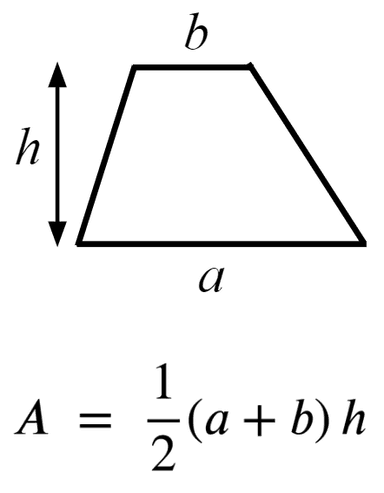
Q2.$$A={1\over2}(a+b)h$$ is the formula for area of a trapezium. It can be rearranged to $${2A\over{h}}-a=b$$ in order to make $$b$$ the of the formula.
Q3.The formula for area of a triangle is $$A={1\over2}bh$$. The area of a triangle with base 7.5 cm and height 6 cm is cm²
Q4.The formula $$s={d\over{t}}$$ can be rearranged to $$t={d\over{s}}$$ or $$d=s\times {t}$$. If $$d=12$$ and $$s=3$$, find $$t$$.
Q5.Find the area of a trapezium with $$h=7$$, $$a=3.2$$, $$b=4.8$$.

Q6.$$A={1\over2}(a+b)h$$ is the formula for area of a trapezium. Select all the correct rearrangements of this formula.
Assessment exit quiz
6 Questions
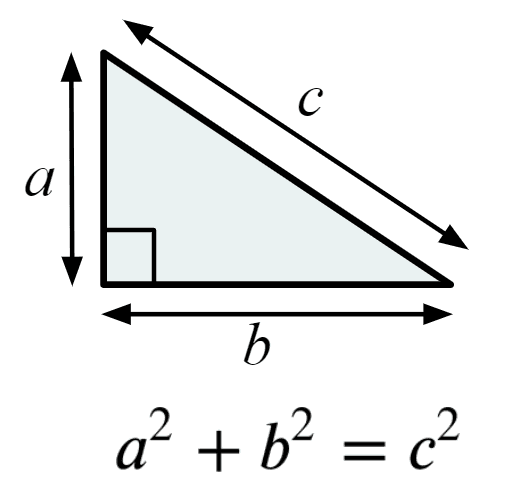
Q1.$$a=\sqrt{{c^2}-b^2}$$ is a __________ of $$a^2+b^2=c^2$$.
Q2.Which arrangement of the formula for area of a triangle makes it quickest for you to find $$b$$ if you know $$A$$ and $$h$$?
Q3.The formula for the area of a triangle is $$A={1\over2}bh$$. The base $$b$$ of a triangle with area 24 m² and height 8 m is m.
Q4.Rearrange the formula $$C=2{\pi}{r}$$ to find the radius of a circle with circumference 42 cm. Leave your answer in terms of $$\pi$$.
Q5.Which rearrangement makes it easiest to find length $$b$$ if you know lengths $$a$$ and $$c$$?

Q6.Jun says "You have to rearrange the formula $$a^2+b^2=c^2$$ into the form $$b=\sqrt{{c^2}-a^2}$$ with $$b$$ as the subject if you want to find $$b$$ given that $$a=6$$ and $$c=10$$." Is Jun right?